How Credit Card Interest Works, and Why Minimum Payments Cost So Much
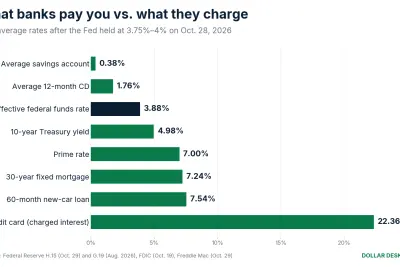
Card accounts charged interest averaged 22.36% APR in August 2026. How daily rates, average balances and grace periods work, and what the minimum payment costs.
Key Takeaways
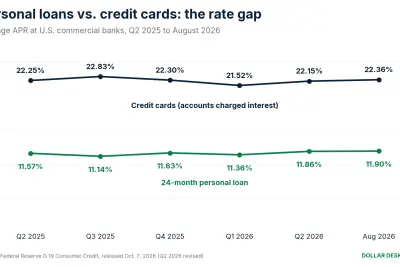
- Credit card accounts that were charged interest paid an average APR of 22.36% in August 2026, while the average stated APR across all accounts was 21.19%, according to the Federal Reserve.
- Many issuers charge interest daily, at a daily periodic rate of the APR divided by 365 or 360, on your average daily balance.
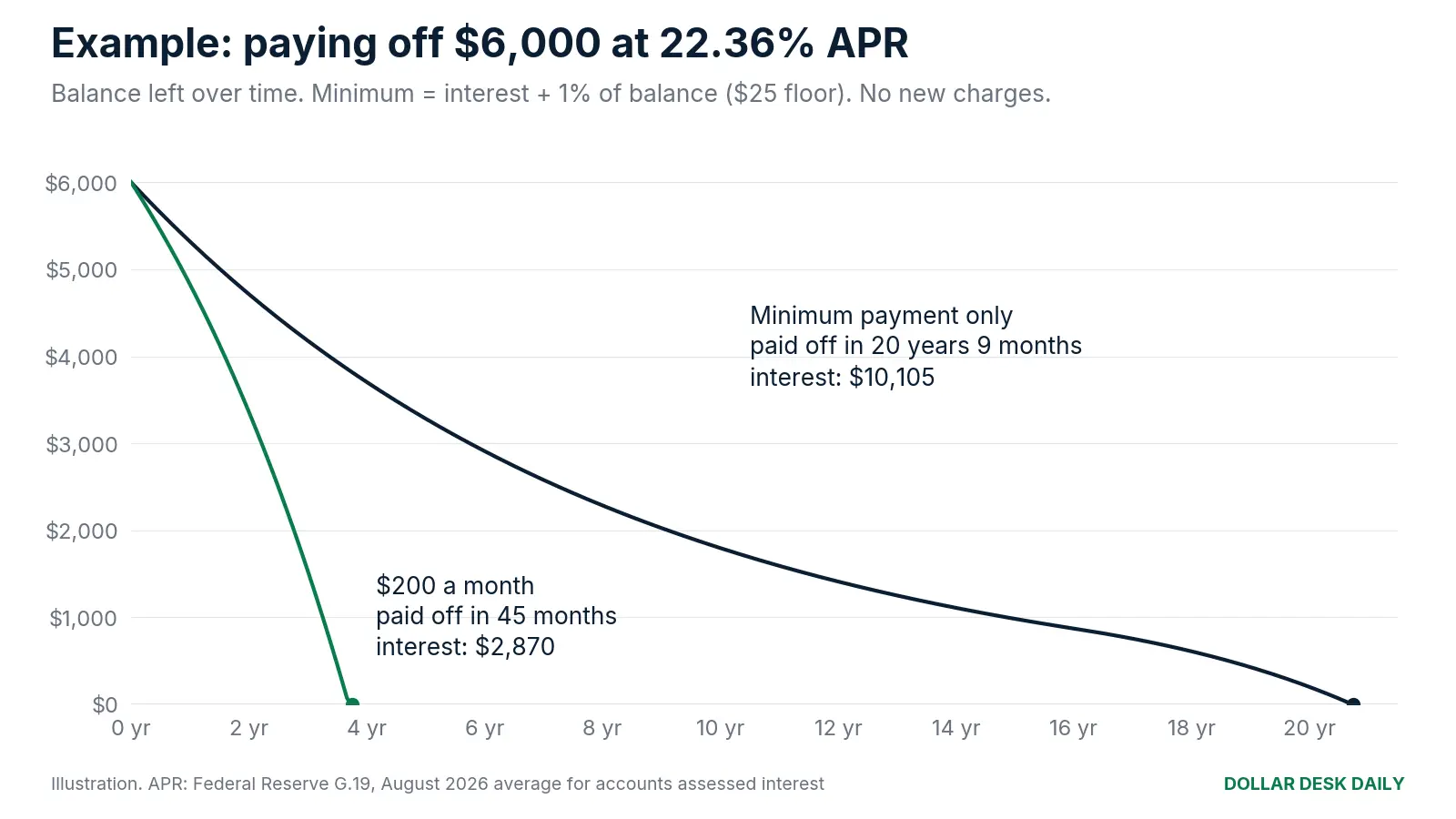
- In our illustration, a $6,000 balance at 22.36% takes 20 years and 9 months and $10,104.57 in interest at the minimum payment, but 45 months and $2,869.67 at a fixed $200 a month.
In this article
Credit card accounts that were charged interest paid an average annual percentage rate of 22.36% in August 2026, according to the Federal Reserve. At that rate, a $6,000 balance costs about $112 in interest a month, and in our example, paying only the minimum stretches the debt past 20 years.
This guide is for anyone who carries a balance or wants to understand the interest line on a statement: how the rate is set, how the daily math works, and what the minimum payment really costs.
Step 1: Know your APR, and which average applies to you
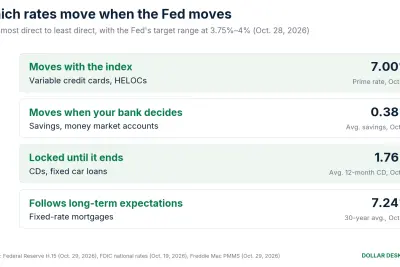
A card’s interest rate is the price of borrowing, stated as a yearly rate called the annual percentage rate, or APR, according to the Consumer Financial Protection Bureau (CFPB). A variable APR moves with an index such as the prime rate. A fixed APR does not follow an index, but the issuer can still change it after giving notice.
The Fed publishes two card averages, and they measure different things:
| Federal Reserve measure, August 2026 | APR | What it covers |
|---|---|---|
| All credit card accounts | 21.19% | Stated APR averaged across all accounts |
| Accounts assessed interest | 22.36% | Finance charges divided by average daily balances, only for accounts charged interest |
| 24-month personal loan (banks) | 11.90% | Average rate, for comparison |
The second number shows what accounts carrying interest-bearing balances were actually charged, based on their finance charges. Your own APR is on your statement, and cards often charge one rate for purchases and different rates for cash advances, according to the CFPB.
Step 2: Turn the APR into a daily rate
Many issuers charge interest daily, the CFPB says. They divide the APR by 365 or 360 to get the daily periodic rate, then apply it to the balance at the end of each day. That interest is added to the balance, so interest compounds daily.
At 22.36%, the daily rate is 22.36% ÷ 365 = 0.0613% a day. On a $6,000 balance, that is about $3.68 a day.
Step 3: See how the average daily balance sets your bill
Many issuers apply the daily rate to your average daily balance, the CFPB says: the balance on each day of the billing cycle, added up and divided by the number of days.
Illustration: a 30-day cycle, 22.36% APR, no grace period. You owe $2,000 for the first 15 days, then a $1,000 purchase lifts the balance to $3,000 for the last 15 days.
- Average daily balance: ($2,000 × 15 + $3,000 × 15) ÷ 30 = $2,500
- Interest: $2,500 × (22.36% ÷ 365) × 30 days = about $45.95
- With daily compounding, it comes to about $46.31; an issuer using a 360-day year would charge about $46.96
Because interest builds every day, paying part of the balance earlier in the cycle lowers the average and the charge.
Step 4: Keep your grace period
A grace period is the time between the end of a billing cycle and the payment due date. If you pay the full balance by the due date, you are generally not charged interest on purchases. Issuers are not required to offer one, but most do on purchases, and bills must arrive at least 21 days before the due date, according to the CFPB.
The catch: if you pay in full some months and not others, you can lose the grace period for the month you do not pay in full and for the month after. New purchases then build interest from the day you make them. Cash advances usually charge interest from day one, with no grace period at all. And once a card starts charging interest, it generally keeps charging until your payment arrives, so after you have carried a balance, paying the statement in full can still leave some interest on the next bill.
What it means for you: the minimum-payment trap
Federal rules generally require card statements to print a “Minimum Payment Warning” with an estimate of how long payoff would take and how much it would cost if you paid only the minimum, under Regulation Z. Here is the same math, worked out.
Illustration, with these assumptions: a $6,000 balance at 22.36% APR; no new charges or fees; the rate never changes; interest each month equals the balance × 22.36% ÷ 12; amounts rounded to the cent. The minimum payment is assumed to be that month’s interest plus 1% of the balance, or $25 if that is higher. Issuers set their own formulas, so yours may differ.
Month 1: interest is $6,000 × 22.36% ÷ 12 = $111.80. The minimum is $111.80 + $60 = $171.80, so only $60 of it reduces the debt.
| $6,000 at 22.36% APR | Minimum only | Fixed $200 a month |
|---|---|---|
| First payment | $171.80 | $200.00 |
| Time to pay off | 249 months (20 years, 9 months) | 45 months (3 years, 9 months) |
| Total interest | $10,104.57 | $2,869.67 |
| Total paid | $16,104.57 | $8,869.67 |
Paying $28.20 more than the first minimum, and keeping the payment at $200 as the balance falls, saves $7,234.90 in interest and ends the debt 204 months sooner. The minimum shrinks as the balance shrinks, so each month less of the debt gets paid off. The estimate on your statement must use your own balance, APRs and minimum-payment formula.
Step 5: Options that lower the interest you pay
Each option has trade-offs to weigh against your own rate and budget.
- Pay more than the minimum. When you pay more than the minimum, the issuer generally must apply the extra to the balance with the highest APR first, according to the CFPB.
- Pay earlier or twice a month. A lower balance on more days means a lower average daily balance.
- Ask your issuer. The CFPB says some creditors may lower your rate, waive fees or change your due date. If you cannot pay, the CFPB says to contact the card company right away.
- Balance transfer. An introductory rate must last at least six months unless you are more than 60 days late. You will probably pay a transfer fee, and new purchases on that card lose the grace period, according to the CFPB.
- Consolidation loan. Personal loans from banks averaged 11.90% for 24 months in August 2026, per the Fed, but the CFPB warns that some rates are temporary and a longer term can cost more in total.
- Nonprofit credit counseling. Counselors can help organize a debt management plan, which typically lowers payments and interest charges, the CFPB says. Debt settlement companies may not collect fees before they settle a debt.
To choose which card to pay down first, see debt avalanche vs. debt snowball.
Mistakes to avoid
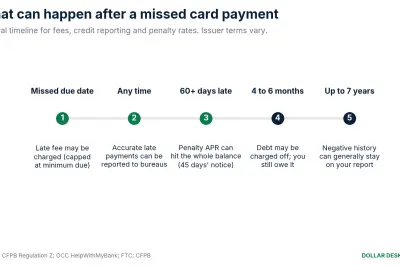
- Paying late. If your minimum payment arrives more than 60 days late, the issuer can raise the rate on your existing balance. It must restore the old rate after six on-time payments in a row, according to the CFPB.
- Mixing a transferred balance with new purchases on the same card, which can mean paying interest on the purchases right away.
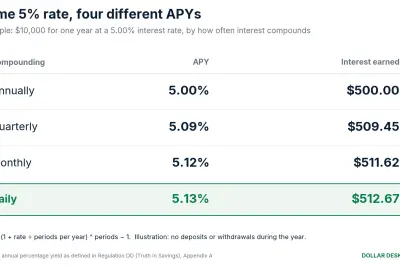
- Comparing APR and APY as if they were the same. See APY vs. APR.
The final step is quick: find the Minimum Payment Warning box on your latest statement and compare its payoff time with what a fixed, higher payment would do.
Sources
- Federal Reserve — G.19 Consumer Credit (released Oct. 7, 2026)
- Consumer Financial Protection Bureau — What is a credit card interest rate? What does APR mean?
- Consumer Financial Protection Bureau — What is a “daily periodic rate” on a credit card?
- Consumer Financial Protection Bureau — How does my credit card company calculate the amount of interest I owe?
- Consumer Financial Protection Bureau — What is a grace period for a credit card?
- Consumer Financial Protection Bureau — If I pay off my credit card balance when it is due, is the company allowed to charge me interest for that month?
- Consumer Financial Protection Bureau — What is the difference between a fixed APR and a variable APR?
- Consumer Financial Protection Bureau — Regulation Z, § 1026.7 Periodic statement
- Consumer Financial Protection Bureau — Regulation Z, Appendix M1 to Part 1026: Repayment Disclosures
- Consumer Financial Protection Bureau — When can my credit card company increase my interest rate?
- Consumer Financial Protection Bureau — How long can I keep a low rate on a balance transfer or other introductory rate?
- Consumer Financial Protection Bureau — What do I need to know about consolidating my credit card debt?
- Consumer Financial Protection Bureau — What should I do if I can’t pay my credit card bills?
- Consumer Financial Protection Bureau — What is credit counseling?