Standard Deduction vs. Itemizing in 2026: How to Tell Which Wins
The 2026 standard deduction is $32,200 for couples and the SALT cap is $40,400. See what goes on Schedule A and a homeowner vs. renter example with the math.
Key Takeaways
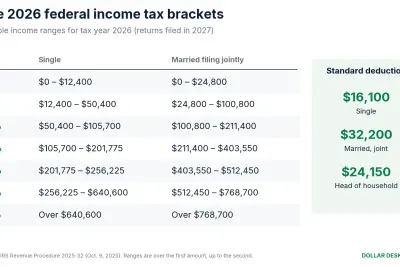
- For tax year 2026, itemizing only pays off if your Schedule A total beats the standard deduction of $16,100 for single filers, $24,150 for heads of household or $32,200 for married couples filing jointly.
- The cap on deductible state and local taxes is $40,400 for 2026, up from $10,000 for 2024, and it shrinks for modified adjusted gross income above $505,000 but not below $10,000, according to the IRS.
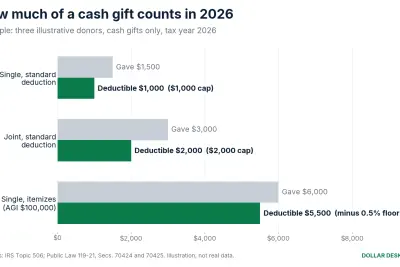
- Starting in 2026, people who take the standard deduction can also deduct up to $1,000 of cash gifts to charity ($2,000 for joint filers), while itemizers can deduct only gifts above 0.5% of their adjusted gross income.
In this article
You itemize only when your deductible expenses add up to more than your standard deduction. For tax year 2026, the return you file in 2027, that bar is $16,100 for single filers, $24,150 for heads of household and $32,200 for married couples filing jointly, according to the IRS. The comparison changed in 2025: the cap on deductible state and local taxes rose from $10,000 to $40,000, and it is $40,400 for 2026.
This guide is for anyone who owns a home, pays high state or property taxes, gives to charity or had large medical bills and wants to know whether Schedule A, the itemized-deduction form, is worth the paperwork.
Step 1: Find your 2026 standard deduction
The standard deduction is a flat amount based on your filing status, adjusted each year for inflation. For 2026, Revenue Procedure 2025-32 sets it at:
| Filing status | 2026 standard deduction |
|---|---|
| Single or married filing separately | $16,100 |
| Head of household | $24,150 |
| Married filing jointly or surviving spouse | $32,200 |
| Extra if 65+ or blind (per condition) | $1,650, or $2,050 if unmarried and not a surviving spouse |
Some people cannot take the standard deduction. One case listed in IRS Topic 501: you are married filing separately and your spouse itemizes.
Some deductions do not depend on this choice. The new deductions for people 65 and older (up to $6,000 each), qualified tips, qualified overtime and qualified car loan interest are available whether you itemize or not, the IRS says. They are claimed on Schedule 1-A, not Schedule A.
Step 2: Add up what can go on Schedule A
The IRS lists these main categories of itemized deductions, each with its own limits:
| Expense | 2026 rule (per IRS) |
|---|---|
| State and local taxes (SALT): income or sales tax, property tax, personal property tax | Combined cap of $40,400 ($20,200 married filing separately) |
| Mortgage interest on a main or second home | Interest on up to $750,000 of home-acquisition debt for homes bought after Dec. 15, 2017 ($375,000 married filing separately) |
| Gifts to charity | Only the amount above 0.5% of adjusted gross income |
| Medical and dental expenses | Only the amount above 7.5% of adjusted gross income |
| Disaster losses | Subject to limits in the Schedule A instructions |
| Gambling losses | Limited to the lesser of 90% of losses or your winnings |
For SALT, you pick either state and local income taxes or general sales taxes, not both, and add property taxes. Water, sewer and trash fees and transfer taxes on a home sale are not deductible, according to IRS Topic 503.
Step 3: Apply the SALT cap as it stands now
The 2025 tax law changed the SALT limit. For 2024 it was $10,000 ($5,000 married filing separately), according to the 2024 Schedule A instructions. Under current rules, according to the IRS:
- 2025: $40,000 ($20,000 married filing separately), reduced when modified adjusted gross income (MAGI) is above $500,000 ($250,000 married filing separately).
- 2026: $40,400 ($20,200 married filing separately), reduced when MAGI is above $505,000 ($252,500 married filing separately).
- Floor: the cap never drops below $10,000 ($5,000 married filing separately).
- End date: IRS training material says the higher cap applies to calendar years that begin in 2025 and end before Jan. 1, 2030.
In the 2025 Schedule A worksheet, the cap is reduced by 30% of the MAGI above the threshold. The IRS posted a correction to the SALT reminder in its 2026 Form 1040-ES and said the form itself will not be revised, so a printed copy may not match the figures above.
Step 4: Compare the totals, including the new charity rule
Starting in 2026, people who take the standard deduction can also deduct up to $1,000 ($2,000 for joint filers) of cash gifts to qualifying charities, according to IRS Publication 505. So compare your Schedule A total with the standard deduction plus that charity amount.
Worked example: homeowner vs. renter
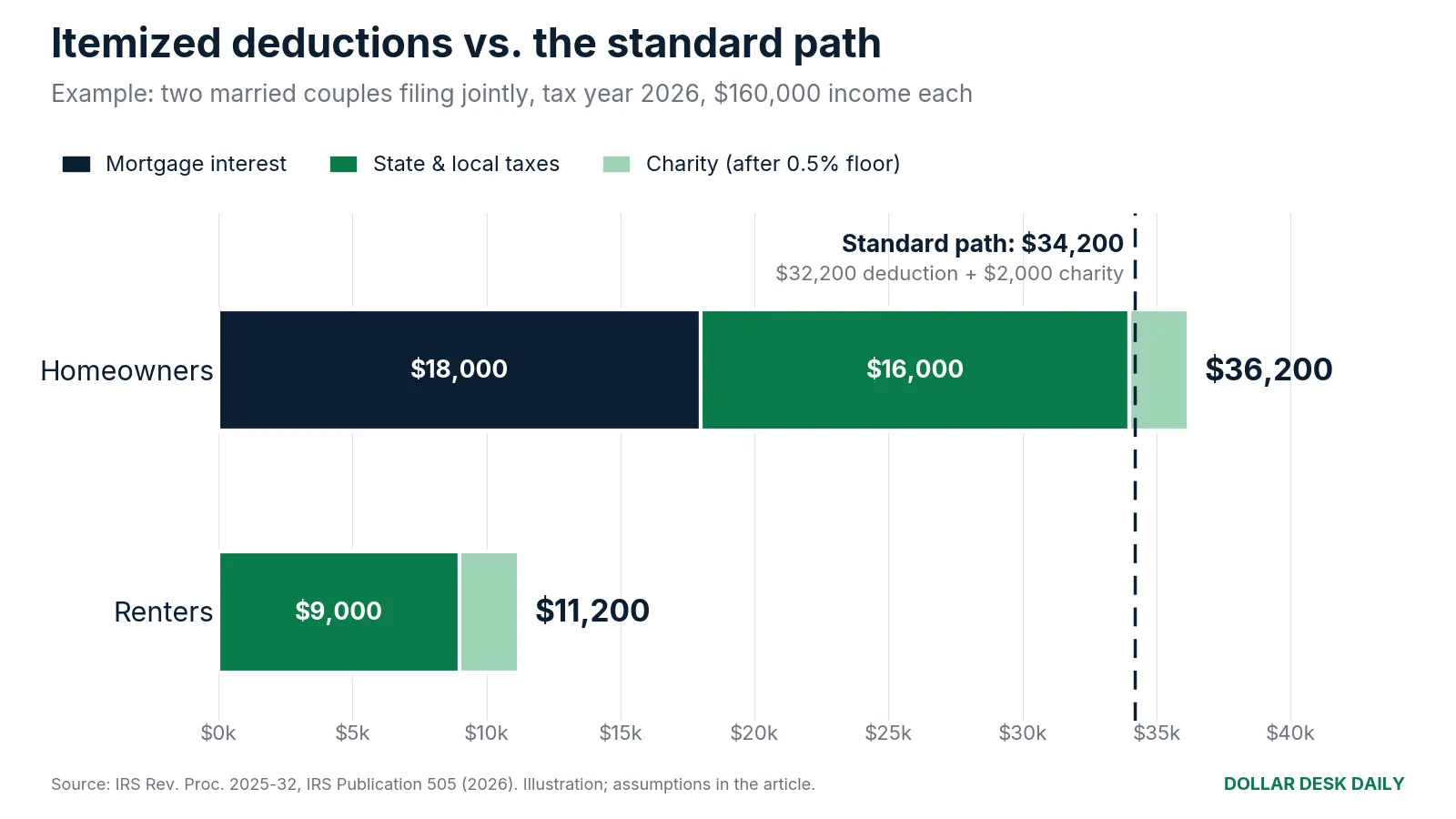
This illustration assumes two married couples filing jointly for 2026, each with $160,000 of adjusted gross income from wages, $9,000 of state income tax withheld and $3,000 of cash gifts to charity. No one is 65 or older, and there are no medical deductions or credits.
The homeowners also pay $18,000 of mortgage interest and $7,000 of property tax.
- SALT: $9,000 + $7,000 = $16,000 (under the $40,400 cap)
- Charity: $3,000 − 0.5% × $160,000 ($800) = $2,200
- Itemized total: $18,000 + $16,000 + $2,200 = $36,200
- Standard path: $32,200 + $2,000 charity = $34,200
Itemizing wins by $2,000. At their 22% marginal rate, that saves about $440 (22% × $2,000).
The renters have no mortgage interest or property tax.
- Itemized total: $9,000 + $2,200 = $11,200
- Standard path: $34,200
The standard deduction wins by $23,000.
| Couple (2026, joint) | Itemized | Standard + charity | Taxable income | Federal income tax |
|---|---|---|---|---|
| Homeowners (itemize) | $36,200 | $34,200 | $123,800 | $16,660 |
| Renters (standard) | $11,200 | $34,200 | $125,800 | $17,100 |
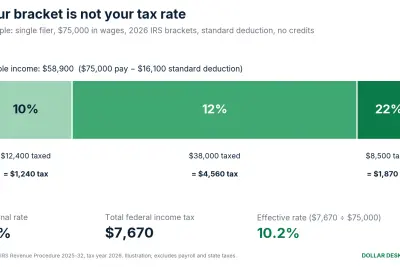
Tax is figured with the 2026 joint brackets: $11,600 plus 22% of taxable income above $100,800. If their SALT deduction were capped at $10,000, with the other 2026 rules unchanged, the homeowners’ itemized total would be $30,200, and the standard path would win for them too. The higher cap is what tips this household toward itemizing.
Mistakes to avoid
- Counting both income and sales taxes. You choose one, then add property taxes.
- Using the full charity total when itemizing. In 2026 the first 0.5% of adjusted gross income is not deductible for itemizers.
- Forgetting the non-itemizer charity deduction. It raises the bar itemizing has to clear, by up to $2,000 for couples.
- Deducting all medical bills. Only the part above 7.5% of adjusted gross income counts, and only costs not paid by insurance.
- Assuming high earners get the full SALT cap. It shrinks above $505,000 of MAGI in 2026, but not below $10,000.
- Missing the top-bracket limit. For 2026, itemized deductions may be reduced for taxpayers with taxable income above $768,700 (joint), $640,600 (single or head of household) or $384,350 (married filing separately), according to Publication 505.
Your next step: gather your mortgage interest statement (Form 1098), property tax bill, state tax withholding from your W-2 and charity receipts, add them using the 2026 limits above, and compare the total with your standard deduction plus the charity amount. For how much a deduction is worth at your income, see our explainer on marginal vs. effective tax rates, and for the full rate tables, our 2026 tax brackets guide.
Sources
- IRS — Revenue Procedure 2025-32
- IRS — IRS releases tax inflation adjustments for tax year 2026, including amendments from the One, Big, Beautiful Bill (IR-2025-103, Oct. 9, 2025)
- IRS — Publication 505 (2026), Tax Withholding and Estimated Tax
- IRS — Correction to state and local income tax deduction amount in the 2026 Form 1040-ES
- IRS — 2025 Instructions for Schedule A (Form 1040), Itemized Deductions
- IRS — 2024 Instructions for Schedule A (Form 1040), Itemized Deductions
- IRS — IRS Courseware – Link & Learn Taxes (Standard Deduction)
- IRS — Topic no. 501, Should I itemize?
- IRS — Topic no. 502, Medical and dental expenses
- IRS — Topic no. 503, Deductible taxes
- IRS — Topic no. 505, Interest expense
- IRS — Topic no. 506, Charitable contributions
- IRS — New and enhanced deductions for individuals